Governments must be accountable for agreements they enter into, particularly agreements involving migration, national security and the movement of people across borders. The Government of Saint Lucia has sought to provide information on the agreement, but questions on the financing of such a programme linger.
But there is another question that deserves equal attention: how much freedom does a Small Island Developing State really possess when negotiating with the world’s most powerful country?
Saint Lucia has agreed to receive up to ten third-country nationals per quarter over two years. Government says the individuals are not criminals and that the arrangement is being implemented with the involvement of the International Organization for Migration.
This is not uniquely Saint Lucian. CARICOM confirmed in July that the United States had proposed third-country-national arrangements to several Caribbean governments. Some had already signed agreements and others were negotiating. CARICOM also said approximately 30 countries globally had entered such arrangements. Importantly, regional leaders expressed concern about the capacity of small states to manage them.
That wider context matters.
Consider what has happened with visas.
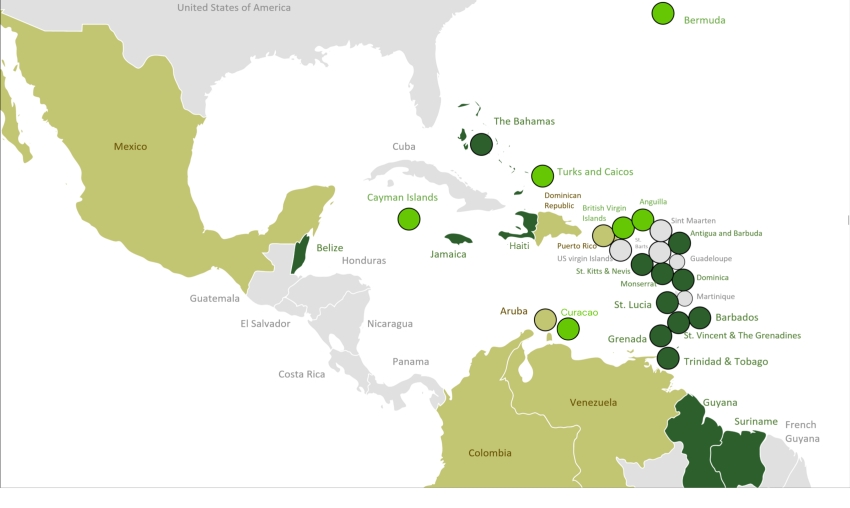
In January, the United States paused the issuance of immigrant visas to nationals of 75 countries. Saint Lucia was among them, alongside Antigua and Barbuda, The Bahamas, Barbados, Belize, Dominica, Grenada, Jamaica, Saint Kitts and Nevis and Saint Vincent and the Grenadines.
That particular pause has since been lifted following a court order, but the episode demonstrated just how quickly access to the United States can change.
Other Caribbean countries have experienced even more direct restrictions.
Antigua and Barbuda, Dominica and Grenada were placed under the United States visa-bond programme. Under the 2026 programme, qualifying B1/B2 applicants could be required to post bonds of US$5,000, US$10,000 or US$15,000 simply to travel. The Trump administration has subsequently moved to make the visa-bond system permanent, with the new framework allowing bonds as high as US$20,000.
These developments should force Caribbean citizens to confront an uncomfortable geopolitical reality.
Saint Lucia is sovereign. Dominica is sovereign. Antigua and Barbuda is sovereign. But sovereignty does not mean equality of power.
The United States controls access to its territory, its visas and one of the world's largest economies. Caribbean countries depend heavily on American tourism, trade, remittances, investment, education opportunities, air connectivity and family networks. Washington therefore possesses diplomatic and economic leverage that Castries simply does not possess in return.
That does not mean Saint Lucia must automatically say yes to Washington.
It means the meaningful question is not simply: “Why did Saint Lucia agree?”
We should also ask: “What would have been the consequences of saying no?”
A responsible government must weigh both.
The challenge for Small Island Developing States is therefore to negotiate fiercely within the limited space available: restrict numbers, exclude criminals, insist that the United States bears the financial burden, protect national security, preserve the right to reject individuals and ensure that arrangements do not drain resources intended for citizens.
CARICOM itself has stated that these arrangements should involve transit rather than permanent settlement and must not divert resources and services from Caribbean citizens.
In international relations, small states sometimes face choices that are not between good and bad, but between difficult and potentially worse.
Saint Lucia's agreement should therefore be scrutinised. But that scrutiny should occur with an understanding of the world as it actually exists.
For small states, sovereignty gives us a voice.
Unfortunately, it does not always give us equal bargaining power.
By Caribbean Writers