

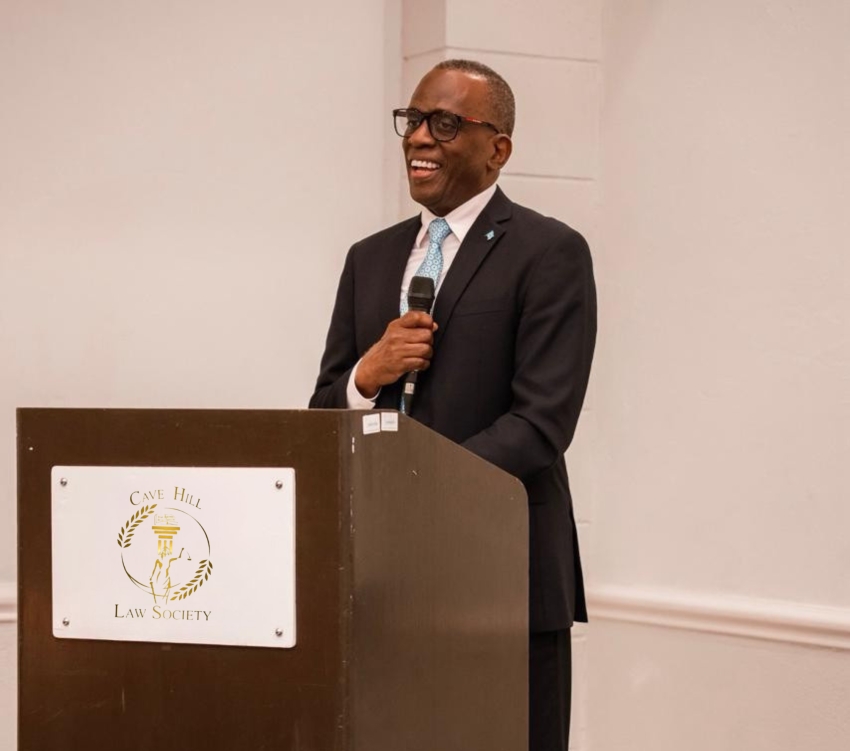
In a five point thematic lecture titled “Leadership in Unprecedented Times,” Pierre described the modern global environment as one defined by volatility, uncertainty, complexity, and ambiguity conditions that demand a new approach to governance.
“These are not just theoretical constructs; they describe the environment in which modern leadership operates,” he noted.
At the core of his philosophy is a guiding principle: “Putting People First.” Pierre stressed that this is not merely a slogan but a framework for decision-making, requiring leaders to constantly evaluate whether policies improve lives, expand opportunity, and protect the most vulnerable.
He pointed to his government’s controversial decision to retain fuel tax revenues during a period of declining global oil prices as an example of responsible leadership. While the move drew criticism, Pierre said it allowed the government to build a financial buffer to cushion future economic shocks.
“Leadership cannot always be anchored in applause; it must be grounded in responsibility,” he asserted.
At the same time, he emphasized the importance of balancing fiscal prudence with compassion, highlighting targeted relief measures such as subsidies and cost-of-living support for vulnerable populations.
Pierre also addressed the broader challenges facing small island states, including climate change, economic instability, and geopolitical tensions, noting that these issues have direct and immediate impacts on Caribbean societies.
He urged a shift toward renewable energy, improved water management, and economic diversification, alongside investments in youth and innovation. Central to this effort is Saint Lucia’s Youth Economy initiative, which empowers young entrepreneurs through funding, training, and mentorship.
Beyond policy, Pierre called on students and future leaders to embrace lifelong learning, critical thinking, and adaptability, particularly in an era shaped by rapid technological change and artificial intelligence.
Importantly, he stressed that leadership is not confined to political office.
“Leadership is not always one person, but one person can make a difference with leadership,” he said, encouraging young people to take active roles in shaping the region’s future.
In closing, Pierre expressed optimism despite global uncertainty, urging Caribbean citizens to focus on solutions within their control such as food security, water resilience, and regional cooperation.
His message resonated as both a reflection on present challenges and a call to action: leadership in these times must be bold, people-centered, and anchored in long-term vision.