

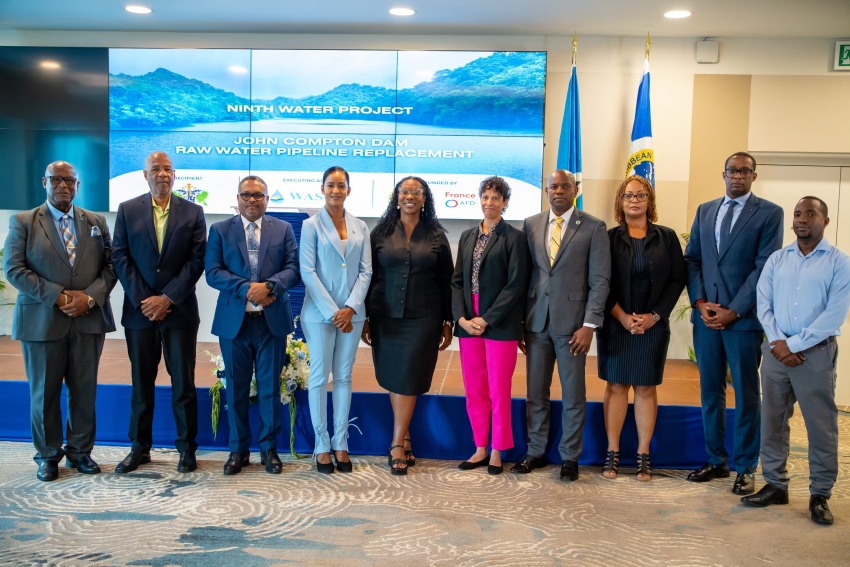
The Ninth Water Project - John Compton Dam Raw Water Pipeline Replacement Project was officially launched on September 18 through a US$22.83 million financing partnership involving the Government of Saint Lucia, Water and Sewerage Company Inc., Caribbean Development Bank, Agence Française de Développement and Government of Italy.
At the centre of the project is the replacement and upgrading of approximately five kilometres of ageing pipeline between the Millet and Vanard pumping stations.
The infrastructure is critical to the movement of raw water from the John Compton Dam.
According to WASCO, the project is designed to reduce the risk of disruptions from pipeline failures and leaks, ultimately improving potable water reliability and reducing outages.
The scale of its potential impact is significant. Service delivery to more than 58% of WASCO's customer accounts is expected to improve, affecting homes as well as commercial activity, including Saint Lucia's tourism industry.
Ultimately, more than 56,000 residential and commercial customers are expected to benefit.
The project also represents a major climate-resilience investment at a time when changing weather patterns continue to place pressure on water systems across the Caribbean.
For households, however, its intended impact is considerably simpler: a more reliable supply of water and fewer disruptions.
The Government had previously indicated that the wider investment in the Ninth Water Project would amount to approximately EC$61.56 million, following approval of financing for the John Compton Dam raw-water pipeline replacement.
The latest project follows earlier rehabilitation work at the John Compton Dam aimed at addressing sedimentation caused by extreme weather events, which had reduced the reservoir's storage capacity.
With the project now formally launched, attention will shift to implementation and whether the infrastructure improvements deliver the expected reduction in water-supply interruptions for households and businesses.