

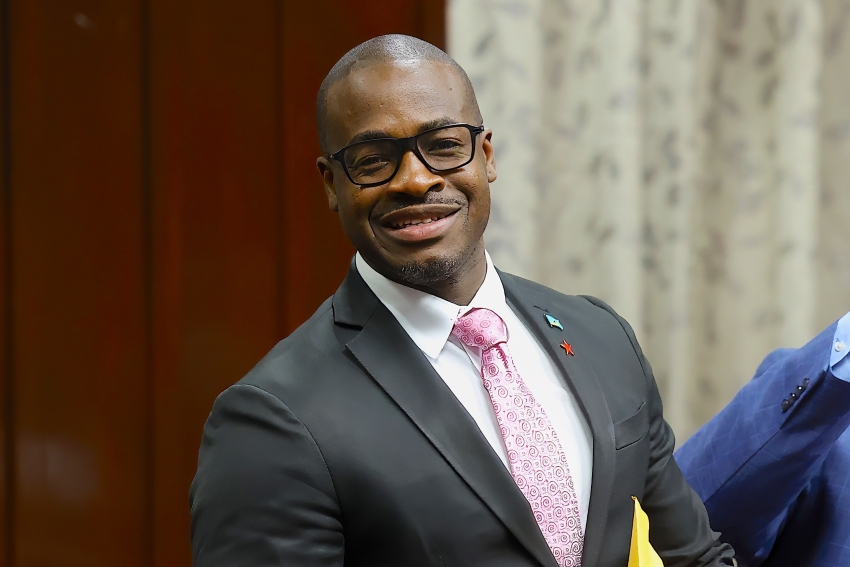
Speaking during the Budget Debate, Casimir pushed back against criticism of the administration’s priorities, arguing that consistent increases in funding for education, youth development and sports reflect a deliberate and sustained strategy to build the country’s future.
“Numbers don’t lie,” the minister said, pointing to a steady rise in allocations over the past five years. Combined spending on education, youth development and sports has grown from approximately $243 million in 2022/2023 to $291.5 million in the 2026/2027 fiscal year, an overall increase of more than $48 million.
For the current fiscal year, education accounts for the largest share at roughly $275 million, while youth development and sports receive $15.8 million. Casimir described the latest increase of $15.5 million as further evidence of the government’s commitment to young people.
He also dismissed claims that resources are being centralized within a single ministry, defending the approach of Prime Minister and Finance Minister Philip J. Pierre.
“We have a Minister of Finance that understands if you want to develop a nation, you must invest in the youth,” Casimir said.
Beyond the headline figures, the minister emphasized that the allocation is heavily programme driven, targeting long-term transformation. Key investments include expanding early childhood education, upgrading school infrastructure, and strengthening teacher training. The government is also rolling out smart classrooms, enhancing digital learning, and introducing a “master teacher” system to improve education quality.
Additional funding will support scholarships and international partnerships to widen access to higher education, while intervention programmes aim to reduce student dropouts through mentorship and behavioural support.
A major focus is also being placed on technical and vocational training. Plans include expanding TVET programmes, converting some secondary schools into skills-based institutions, and developing modern training labs aligned with industry needs. Financial support will be provided to vulnerable students to improve access to these opportunities.
Youth development and sports are also central to the strategy. The government is advancing the National Youth Policy 2025–2030, expanding grassroots sports initiatives, and supporting semi-professional leagues as part of broader crime prevention efforts. Investments will also go toward a national mentorship programme and upgrades to key facilities, including the George Odlum Stadium.
Casimir acknowledged that the challenges facing young people, including crime and social issues, cannot be solved overnight, noting that they developed over many years.
“The issues that face young people in this country did not begin five years ago. It will not take five years to cure,” he said.
Despite this, the minister expressed confidence that sustained investment will deliver long-term results, arguing that education, skills development and opportunity remain the foundation for national progress.
