

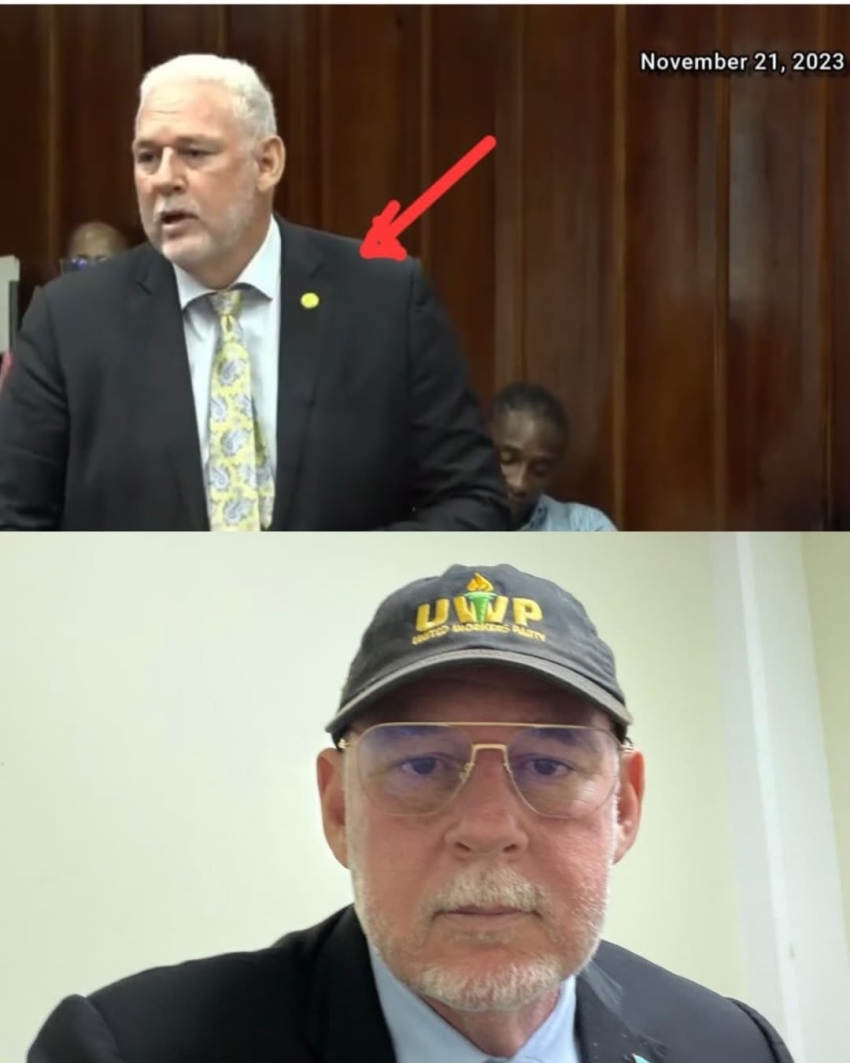
The controversy began when opposition Senator Elisha Norbert attempted to raise a point of order during the special joint sitting marking the 75th anniversary of universal adult suffrage. His objection concerned government members wearing star lapel pins. The intervention and the ensuing dispute diverted attention from an occasion intended to recognise a defining milestone in Saint Lucia’s democracy.
Chastanet subsequently appeared in the House wearing a UWP-branded cap. He acknowledged that the action was deliberate, explaining that he wanted to expose what he considered inconsistent treatment of political paraphernalia. Speaker Claudius Francis challenged the wearing of the cap, prompting another confrontation over parliamentary decorum.
Yet parliamentary footage from 2023 presents an uncomfortable counterpoint to Chastanet’s protest. On more than one occasion, he wore a UWP lapel pin in Parliament without being stopped.
That history directly challenges the selective outrage now directed at government members. If Chastanet previously wore his party’s insignia in the chamber without objection, he should explain why a comparable display by government members became grounds for protest.
His own experience also complicates the allegation that tolerance of lapel pins demonstrates preferential treatment for the Government. By the account shown in the footage, that tolerance extended to him.
There is a legitimate place for seeking clarity about parliamentary attire and the consistent application of rules. But staging a confrontation with a party cap does little to resolve those questions. It produces a spectacle while leaving citizens waiting for substantive scrutiny of matters affecting their lives.
The timing of Norbert’s intervention deserves criticism for the same reason. A special sitting commemorating universal adult suffrage called for respect for the occasion. Concerns over attire could have been put to the presiding officers through an appropriate channel without allowing a dispute over symbols to overshadow the commemoration.
Chastanet’s enthusiasm for this confrontation also invites scrutiny of his priorities within the UWP. After two successive general election defeats, the party still faces the work of rebuilding, confronting internal weaknesses and responding to defections to the Saint Lucia Labour Party.
In August, Chastanet himself acknowledged structural problems and explained that the party was considering whether reforms should precede its convention. That explanation establishes that the need for internal change is recognised within the leadership.
With a subsequent convention still outstanding, supporters are entitled to ask when those unresolved questions will receive the attention being devoted to caps and lapel pins.
Saint Lucia needs an opposition prepared to examine legislation, challenge public expenditure and offer credible alternatives. Chastanet’s protest instead exposes a basic problem of credibility: demanding standards from others requires an honest accounting of one’s own conduct.
By Caribbean Writers